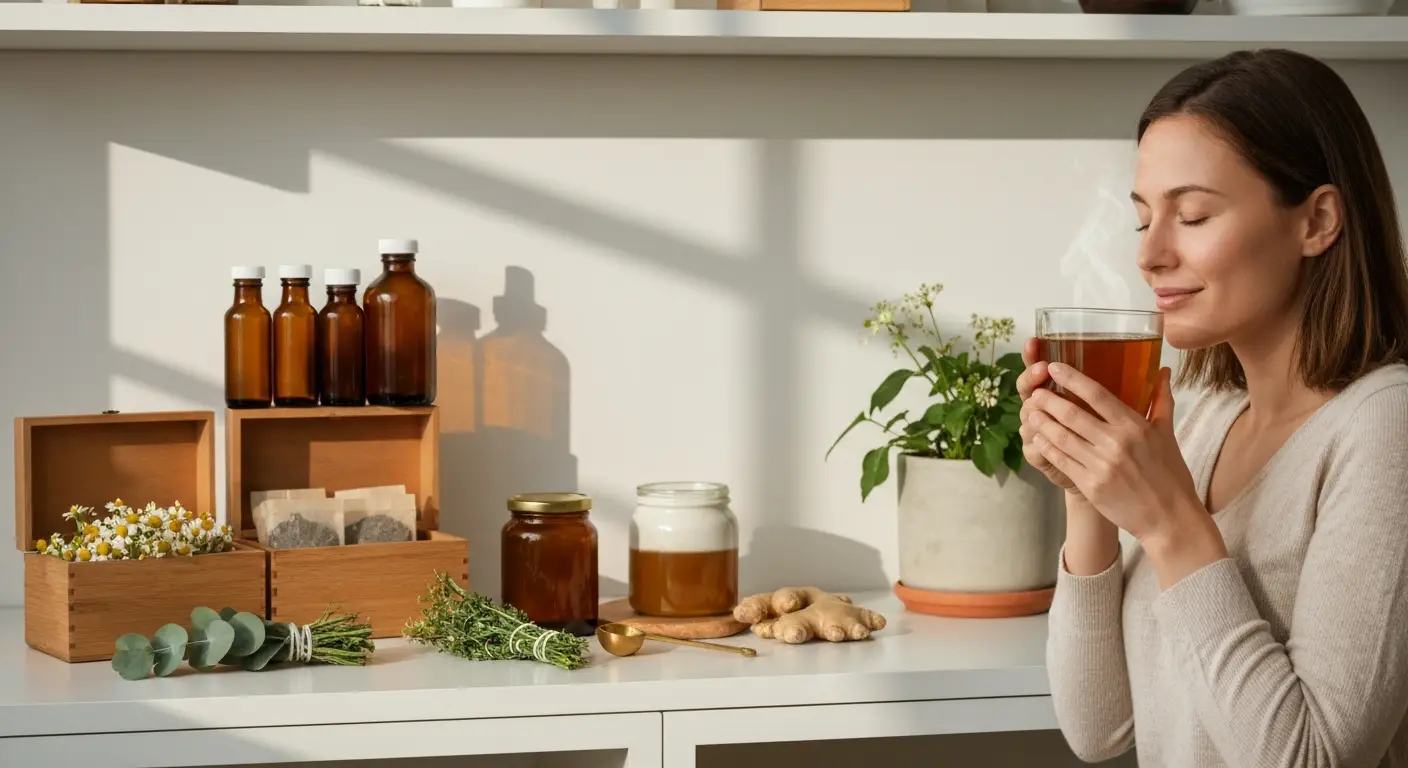
Last updated: November 23, 2026. For general education only, not medical advice.
Seasonal allergies, also called hay fever or allergic rhinitis, are triggered when trees, weeds and grasses release pollen into the air [4]. Many people look for natural options, but the evidence differs widely between remedies. This guide summarizes what the National Center for Complementary and Integrative Health (NCCIH) and other sources say about each.
Key takeaways
- Saline nasal irrigation has the best support among natural approaches, with some evidence of modest improvement in symptoms [1][4].
- Rinsing devices must be used with distilled, boiled (then cooled) or otherwise safe water. Unfiltered tap water is not safe for nasal rinsing [1][2].
- NCCIH says there is no convincing scientific evidence that honey relieves seasonal allergies [1][3].
- The evidence for probiotics is inconsistent, and the herb butterbur raises safety concerns [1].
- Natural remedies should not replace prescribed allergy medicine without your doctor’s advice.
Saline nasal irrigation
Putting salt water into one nostril and letting it drain from the other can modestly improve allergy symptoms [4]. NCCIH describes the evidence as “some” and the benefit as modest [1]. It is generally safe, but the water matters. The U.S. Food and Drug Administration says tap water that has not been filtered, treated or processed in specific ways is not safe for nasal rinsing, and NCCIH recommends distilled or boiled water to prevent rare but serious infections, including from the organism Naegleria fowleri [1][2]. Neti pots and other rinsing devices must be used and cleaned properly, so follow the instructions that come with your device [4].
Local honey
The idea is that honey contains small amounts of pollen and could build tolerance. NCCIH says only a few studies have looked at honey for seasonal allergies, results have been inconsistent, and there is no convincing evidence that it provides relief [1][3]. Honey is generally safe, but children under one year should not eat it because of the risk of infant botulism, and people allergic to pollen may also react to honey and other bee products [1][3].
Probiotics
There is some limited evidence that probiotics may improve certain symptoms and quality of life in people with allergic rhinitis, but the overall data are inconsistent and come from small trials that differ a great deal. NCCIH says routine use of probiotics for prevention or treatment cannot be recommended based on current evidence [1]. In people with weakened immune systems or other underlying conditions, serious infections have occasionally been reported with probiotics [3].
Butterbur
Some studies of butterbur root or leaf extracts suggest they may help hay fever symptoms, but NCCIH says the data are not convincing and that there are safety concerns [1]. Butterbur may also cause allergic reactions in people sensitive to ragweed, chrysanthemums, marigolds and daisies [1]. Discuss it with a doctor before considering it.
Acupuncture
A 2015 evaluation of 13 studies of acupuncture for allergic rhinitis, involving 2,365 participants, found evidence that it may be helpful [4].
Quercetin, teas and other supplements
Many other nutritional approaches have been studied for allergic rhinitis, including quercetin, omega-3 fatty acids, stinging nettle, spirulina and grape seed extract, but NCCIH does not describe any of them as proven [5]. Statements such as “quercetin reduces symptoms by 50%” or “probiotics cut symptoms by 45%” that appear on some websites could not be traced to reliable studies. Likewise, we did not find good evidence that herbal teas relieve allergy symptoms.
Reducing pollen exposure
NCCIH notes that when pollen counts are high, staying indoors, wearing a mask, or rinsing off when you come inside can help [2]. These are simple, low-cost steps that complement other measures.
Frequently asked questions
Should I stop my allergy medicine?
No. Do not stop prescribed medication without talking to your doctor. People manage seasonal allergies with medication, by avoiding triggers or with allergy shots (immunotherapy) [4].
Are neti pots safe?
Generally yes, when used and cleaned properly with distilled, boiled and cooled, or otherwise safe water [1][2].
Does local honey work?
There is no convincing evidence that it does [1][3].
Are natural remedies safe for children?
Honey is not suitable for infants under one year [3]. Ask a pediatrician before giving a child any herbal product or supplement.
When should I see an allergist?
If symptoms are severe, last through the season or disrupt sleep and daily life, a doctor or allergist can recommend proven treatments, including medication and immunotherapy.
Conclusion
For seasonal allergies, saline nasal rinses are the natural option with the best support, and reducing pollen exposure helps too. Honey, probiotics, teas and most supplements are unproven, and butterbur carries safety risks. Natural approaches can complement, but should not replace, treatment recommended by your healthcare provider.
References
- NCCIH Clinical Digest. Seasonal allergies and complementary health approaches: what the science says (May 2023). https://nccih.nih.gov/health/providers/digest/allergies-science
- NCCIH. 6 things to know about complementary health approaches for seasonal allergy relief. https://www.nccih.nih.gov/health/tips/things-to-know-about-complementary-health-approaches-for-seasonal-allergy-relief
- NCCIH. Seasonal allergies at a glance (updated March 2019). https://www.nccih.nih.gov/health/seasonal-allergies-at-a-glance
- NCCIH. Things to know about complementary approaches for seasonal allergies. https://nccih.nih.gov/health/tips/allergies
- NCCIH. Seasonal allergies: complementary health approaches. https://nccih.nih.gov/health/allergies/seasonal
Medical disclaimer
This article is for informational purposes only and does not replace professional medical advice, diagnosis or treatment. Always consult a qualified healthcare provider before starting a supplement, particularly if you are pregnant, breastfeeding, taking medication or have a medical condition.