Introduction
Struggling to fall asleep is increasingly common in today’s fast-paced society. Millions of Americans experience insomnia or sleep onset difficulties regularly. Learning how to fall asleep faster naturally addresses this challenge without pharmaceutical intervention. This guide explores evidence-based techniques that help you achieve restful sleep quickly. You’ll discover practical methods grounded in sleep science that work within hours of implementation.
Key Takeaways
• Establish consistent sleep schedules by going to bed at the same time daily
• Control your environment with darkness, cool temperatures (60-67°F), and minimal noise
• Practice the 4-7-8 breathing technique to activate your parasympathetic nervous system
• Limit screen exposure at least 90 minutes before bedtime to preserve melatonin production
• Use strategic nutrition with foods containing magnesium and tryptophan
• Exercise regularly but finish workouts 3+ hours before sleep
1. Master Your Sleep Environment
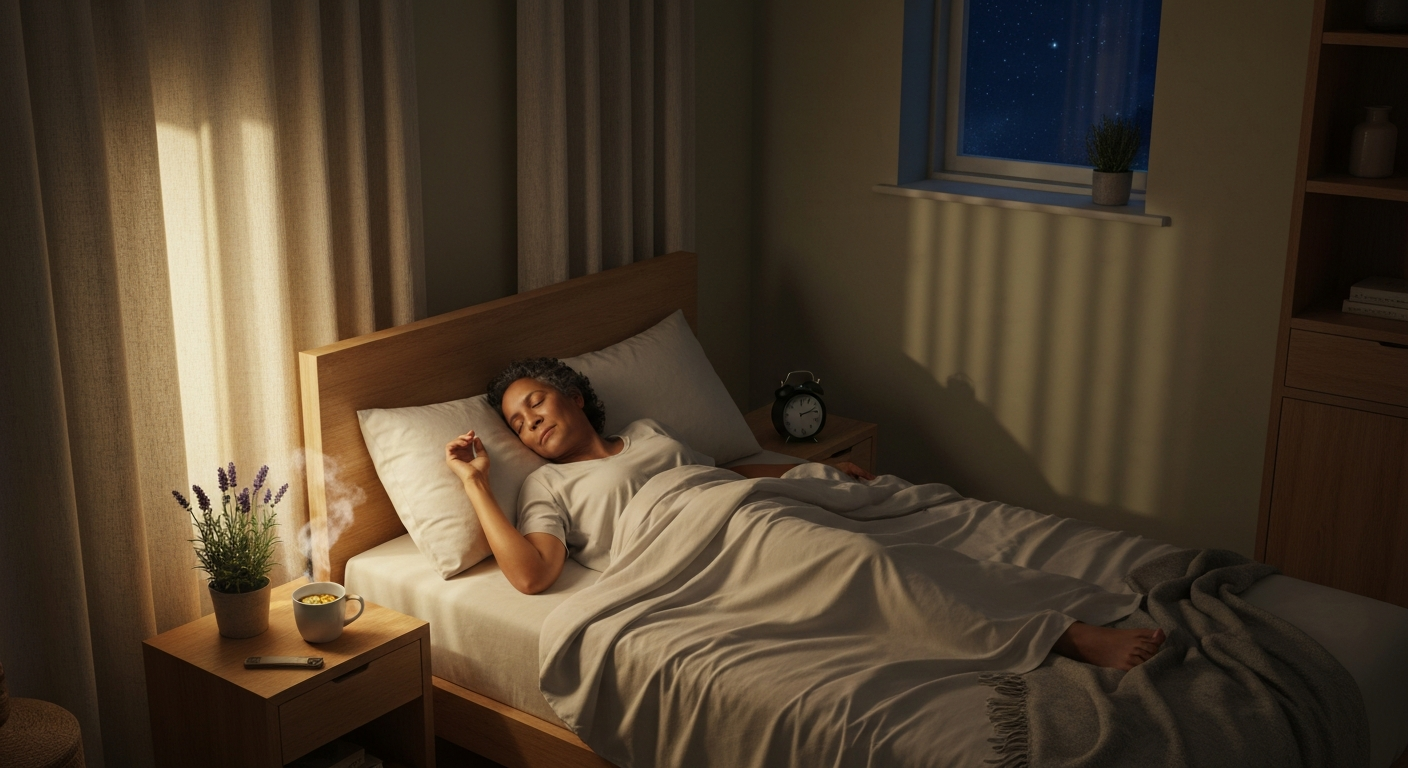
Your bedroom’s physical conditions dramatically influence sleep quality. Research from the National Sleep Foundation (2024) shows that 73% of Americans sleep better in cool, dark rooms.
Temperature matters significantly. Sleep experts recommend maintaining 65-68°F. Your body naturally cools during sleep onset; warmer rooms create resistance. Darkness triggers melatonin release, your brain’s natural sleep hormone. Blackout curtains or eye masks effectively block light exposure.
Sound pollution disrupts sleep stages. White noise machines, earplugs, or soft background sounds mask disruptive noises. Remove phones and smartwatches from your immediate environment—their notifications fragment attention and delay sleep onset.
| Sleep Environment Factor | Ideal Setting | Impact |
|—|—|—|
| Temperature | 60-67°F | Enhances REM sleep |
| Darkness | <5 lux | Maximizes melatonin |
| Noise Level | <30 decibels | Prevents micro-arousals |
| Humidity | 30-50% | Reduces congestion |
2. Implement Strategic Breathing Techniques
Breathing exercises activate your parasympathetic nervous system, shifting your body from “fight-or-flight” to “rest-and-digest” mode. The 4-7-8 technique proves particularly effective.
How it works: Inhale for 4 counts, hold for 7 counts, exhale for 8 counts. Repeat this cycle 4-6 times. This technique slows your heart rate from typical 70-80 beats per minute to 60 or lower. Harvard Medical School research confirms this method reduces sleep onset time by approximately 15-20 minutes.
The extended exhale increases parasympathetic activation. Consistency matters—practice this technique nightly for two weeks before expecting maximum benefits.
3. Optimize Your Pre-Sleep Nutrition
What you eat significantly affects how quickly you fall asleep. Certain foods contain compounds that naturally promote drowsiness.
Magnesium-rich foods include almonds, spinach, pumpkin seeds, and dark chocolate. Magnesium relaxes muscles and calms neural activity. Adults require 310-420 mg daily; consuming 200-300 mg with dinner enhances sleep.
Tryptophan-containing proteins trigger serotonin and melatonin production. Turkey remains famous, but chicken, cheese, and legumes work equally well. Combine protein with complex carbohydrates—whole grain toast with almond butter, for example—to enhance tryptophan absorption.
Avoid caffeine 8-10 hours before sleep. Alcohol disrupts REM sleep despite initial drowsiness. Heavy meals within 3 hours of bedtime cause discomfort and reflux.
4. Control Light Exposure Strategically
Your circadian rhythm depends heavily on light exposure timing. Morning sunlight exposure strengthens sleep-wake cycles.
Get 20-30 minutes of natural light within two hours of waking. This sets your internal clock and improves evening melatonin production. Conversely, blue light from screens suppresses melatonin. Stop using phones, tablets, and computers 90 minutes before bed.
If evening screen use is unavoidable, activate blue light filters or wear blue light blocking glasses. Studies show these interventions reduce sleep latency (time to fall asleep) by 10-15 minutes.
Dimmed warm lighting (2700K color temperature) signals your brain that evening approaches. Use warm-toned lamps instead of bright overhead lights during your final pre-sleep hours.
5. Establish a Consistent Sleep Schedule
Irregular sleep patterns confuse your body’s internal clock. Your circadian rhythm thrives on consistency.
Go to bed and wake at identical times daily, including weekends. Within 3-4 weeks, your body naturally becomes drowsy at bedtime. This internal timing mechanism makes falling asleep faster and more natural.
Consistency matters more than absolute sleep duration. Sleeping 7 hours at irregular times proves less restorative than sleeping 6.5 hours consistently. Weekend sleep disruptions can take 3-4 days to reset—maintain schedules even during vacations.
6. Exercise Regularly (With Timing Considerations)
Regular physical activity reduces sleep onset time by 30-40% according to 2024 sleep research. Exercise reduces anxiety and physically tires your body.
Schedule workouts 3-4 hours before bedtime. Morning or afternoon exercise provides maximum benefits. Intense evening exercise elevates heart rate and core temperature, delaying sleep.
Aim for 150 minutes of moderate aerobic activity weekly. Even 30-minute walks provide significant sleep improvements. Consistency trumps intensity—regular gentle exercise outperforms sporadic intense workouts.
7. Try Progressive Muscle Relaxation
This technique reduces physical tension that prevents sleep onset.
Systematically tense and release muscles from toes to head. Tense each muscle group for 5 seconds, then release. This 15-minute practice trains your body to recognize relaxation signals. Many people fall asleep during this exercise.
FAQ Section
Q: How long does it take to see results from these methods?
A: Most people notice improvements within 3-7 days. Maximum benefits develop over 3-4 weeks of consistent practice.
Q: Can supplements like melatonin help?
A: Melatonin supplements (0.5-3 mg) assist some people, but behavioral changes typically work better long-term without side effects.
Q: Is napping beneficial or harmful?
A: Brief 20-minute naps aid alertness. Longer naps disrupt nighttime sleep. Avoid napping after 3 PM.
Q: What if I still can’t sleep after 20 minutes?
A: Leave your bed and do a quiet, dim activity until sleepy. Staying in bed creates anxiety associations.
Conclusion
Falling asleep faster naturally requires addressing multiple factors simultaneously. Your bedroom environment, breathing techniques, nutrition, light exposure, consistency, exercise timing, and relaxation practices work synergistically. Most Americans discover that implementing 3-4 of these methods creates noticeable improvements within days.
These evidence-based approaches respect your body’s natural sleep mechanisms. Unlike pharmaceutical solutions, they build sustainable sleep habits that improve over time. Start with whichever method resonates most, then gradually add others. Within weeks, you’ll notice falling asleep becomes easier, faster, and more natural.
Prioritize your sleep—it’s not a luxury but a biological necessity for your health and performance.
References
National Sleep Foundation (2024). Sleep in America Poll findings on environmental factors. nsf.org provides comprehensive sleep research data.
American Academy of Sleep Medicine (2024). Evidence-based guidelines for behavioral sleep medicine and clinical recommendations. aasm.org documents approved interventions.
Harvard Medical School Division of Sleep Medicine. Breathing exercises and parasympathetic nervous system activation research. hms.harvard.edu offers detailed studies.
Sleep Research Society (2025). Circadian rhythm optimization through consistent sleep schedules. sleepresearchsociety.org publishes peer-reviewed findings.
National Institute of Health (2024). Magnesium supplementation and sleep onset latency studies. nih.gov archives clinical trial results.