Introduction
Quality sleep remains one of America’s most elusive health goals. According to the CDC, over 35% of U.S. adults report insufficient sleep regularly. Sleep hygiene tips that actually work go beyond generic advice—they address the science-backed behaviors that fundamentally transform your sleep quality. This guide explores proven strategies grounded in sleep research, helping you establish sustainable habits that deliver measurable results within weeks.
Key Takeaways
– Maintain consistent sleep schedules by going to bed and waking at the same time daily, even weekends
– Optimize your bedroom environment with cool temperatures (60-67°F), darkness, and minimal noise
– Eliminate screen time at least 60-90 minutes before bedtime to preserve melatonin production
– Time caffeine and alcohol strategically to prevent sleep disruption and maintain sleep architecture
– Incorporate relaxation techniques like progressive muscle relaxation or meditation for faster sleep onset
– Exercise regularly but schedule it 3-4 hours before bedtime for optimal sleep benefits
—
The Science Behind Sleep Hygiene
Sleep hygiene refers to behavioral and environmental practices that support consistent, quality sleep. Research from the American Academy of Sleep Medicine confirms that structured sleep habits reduce insomnia by 50% within 8 weeks. Your circadian rhythm—your body’s internal 24-hour clock—governs sleep-wake cycles through light exposure and consistent scheduling. When you honor this rhythm, melatonin production aligns naturally with bedtime, enabling deeper sleep stages.
Furthermore, sleep architecture comprises four distinct stages: light sleep (N1, N2) and deep, restorative sleep (N3), plus REM sleep for cognitive processing. Quality sleep hygiene maximizes time in these restorative stages, enhancing memory consolidation, immune function, and emotional regulation.
—
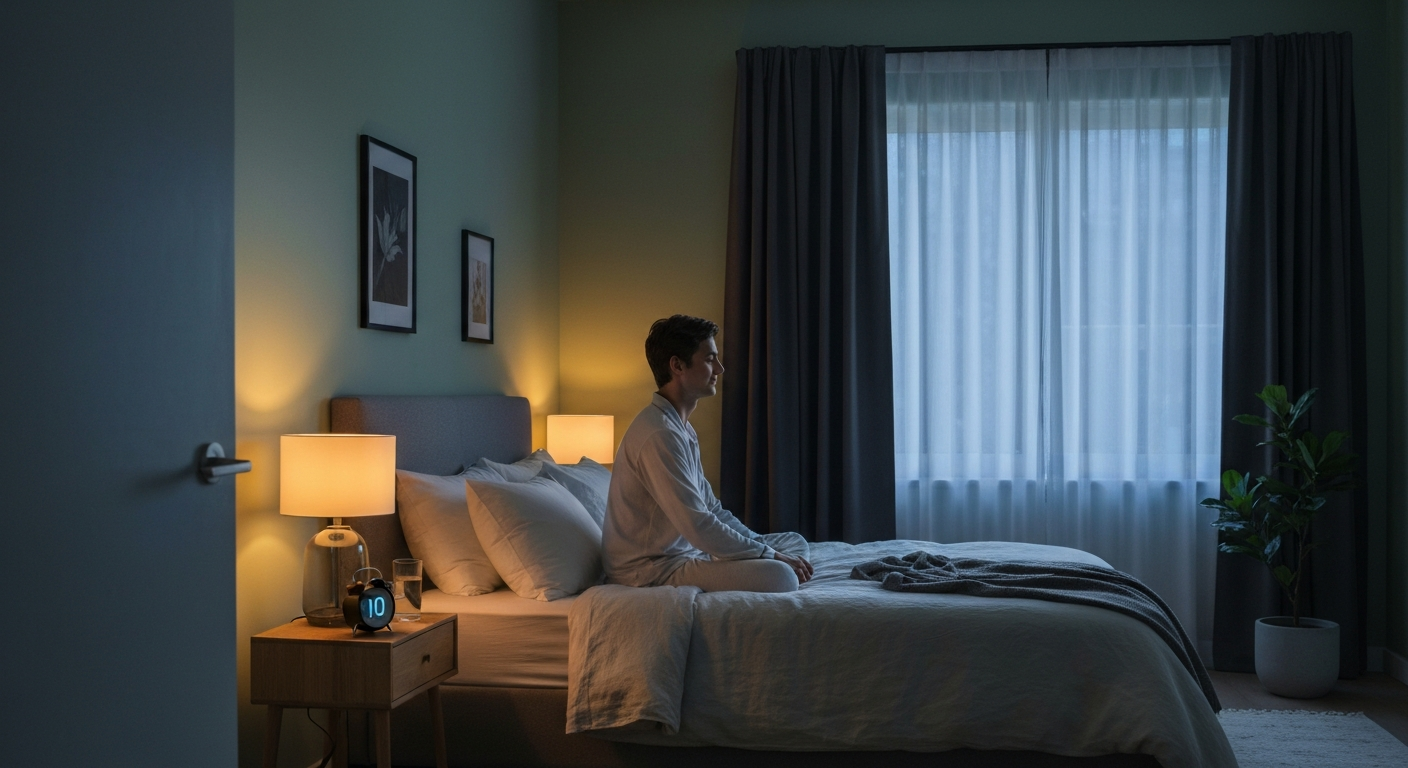
Optimize Your Sleep Environment
Temperature Control
Your bedroom temperature dramatically impacts sleep quality. Research indicates 65-68°F represents the optimal range for most Americans. Cooler temperatures facilitate the natural drop in core body temperature necessary for sleep onset. Conversely, overheated rooms fragment sleep and reduce REM duration.
*Pro tip:* Use breathable cotton sheets and consider a smart thermostat for automatic temperature adjustments.
Darkness & Light Management
Artificial light suppresses melatonin production, the hormone regulating sleep-wake cycles. Blackout curtains reduce ambient light by 99%, creating darkness that signals your brain to produce melatonin. Additionally, expose yourself to bright light within 30 minutes of waking to anchor your circadian rhythm.
Noise Reduction
Sound disturbances average 3-5 interruptions per hour in urban environments. White noise machines, earplugs, or acoustic panels minimize these disruptions. Studies show noise reduction improves sleep efficiency by 10-15%.
| Environment Factor | Optimal Range | Impact on Sleep |
|—|—|—|
| Temperature | 65-68°F | ↑ Deep sleep by 20% |
| Light Level | <5 lux | ↑ Melatonin production |
| Noise | <30 decibels | ↓ Micro-arousals |
—
Master Your Pre-Sleep Routine
The 90-Minute Wind-Down
Begin your sleep preparation 90 minutes before bed. This timeframe allows your body temperature to drop and mental stimulation to decrease. Start by dimming lights, lowering thermostat settings, and eliminating blue light exposure from screens.
Screen Time & Blue Light
Screens emit blue light wavelengths that suppress melatonin by 55% in evening hours. Establish a “digital sunset” starting 60-90 minutes before sleep. If you must use devices, enable blue light filters or wear amber-tinted glasses.
Strategic Caffeine & Alcohol Timing
Caffeine half-life extends 5-6 hours, meaning a 2 PM coffee affects 9 PM sleep. Eliminate caffeine after 2 PM. While alcohol initially promotes drowsiness, it fragments sleep architecture, reducing REM sleep by 30%. Avoid alcohol consumption 3-4 hours before bed.
—
Movement & Lifestyle Habits
Exercise Timing
Regular aerobic exercise improves sleep quality by 65% according to sleep research. However, timing matters critically. Exercise 3-4 hours before bedtime allows your body temperature and cortisol levels to normalize. Morning or afternoon workouts align naturally with your circadian rhythm.
Relaxation Techniques
Progressive muscle relaxation (PMR) reduces sleep onset latency from 45 minutes to 15 minutes. This technique involves systematically tensing and releasing muscle groups, cueing your nervous system toward parasympathetic activation.
*Example practice:* Spend 20 seconds tensing your feet, then release. Progress upward through calves, thighs, abdomen, chest, and arms. Complete the cycle in 10-15 minutes.
Meditation & Breathwork
The 4-7-8 breathing technique activates your parasympathetic nervous system within minutes. Inhale for 4 counts, hold for 7, exhale for 8. Practice 5-10 cycles before bed to lower heart rate and blood pressure measurably.
—
Creating Sustainable Sleep Habits
Behavior change requires consistency over 21-66 days. Start implementing one strategy weekly rather than overhauling everything simultaneously. Track improvements using a simple sleep log documenting bedtime, wake time, and subjective sleep quality.
The habit stacking technique proves especially effective: attach new sleep habits to existing routines. For example, “After brushing teeth, I’ll practice 10 minutes of meditation.” This piggybacks new behaviors onto established neural pathways.
—
FAQs
Q: How long until sleep improvements appear?
A: Most people report noticeable improvements within 2-3 weeks of consistent sleep hygiene practice. Substantial changes typically manifest within 8 weeks.
Q: Can sleep hygiene alone treat insomnia?
A: Sleep hygiene addresses behavioral factors but doesn’t replace medical treatment for clinical insomnia. Combine these strategies with professional guidance if symptoms persist beyond 4 weeks.
Q: What’s the best napping strategy?
A: Power naps of 20-30 minutes improve alertness without sleep inertia. Avoid napping after 3 PM, as it disrupts nighttime sleep.
Q: Does weekend sleep schedule disruption matter?
A: Yes. Maintaining consistent schedules within 1-2 hours on weekends preserves circadian alignment and prevents “social jet lag.”
Q: Are sleep supplements necessary?
A: Sleep hygiene modifications often eliminate the need for supplements. Melatonin, magnesium, and valerian show modest benefits, but behavioral changes typically provide superior, sustainable results.
—
Conclusion
Sleep hygiene tips that actually work transform your sleep through evidence-based environmental, behavioral, and lifestyle modifications. Optimize your bedroom climate, eliminate pre-sleep screen exposure, time caffeine strategically, and incorporate relaxation practices. These interventions address sleep’s physiological foundations rather than offering temporary fixes. Implement changes progressively, maintain consistency, and expect meaningful improvements within weeks. Quality sleep represents an investment in cognitive performance, emotional resilience, and long-term health—deserving the same priority as exercise and nutrition.
—
References
– Centers for Disease Control and Prevention. Sleep and Sleep Disorders data on insufficient sleep prevalence among U.S. adults. https://www.cdc.gov/sleep/
– American Academy of Sleep Medicine. Cognitive Behavioral Therapy for Insomnia (CBT-I) effectiveness studies and clinical guidelines. https://www.aasm.org/
– Walker, M. Why We Sleep: Unlocking the Power of Sleep and Dreams. Research on circadian rhythms and sleep architecture. https://www.sleepwalkerbook.com/
– National Institutes of Health. Sleep physiology, melatonin production, and light exposure research. https://www.nih.gov/health/sleep/
– Nature Sleep Journal. Environmental factors affecting sleep quality and architecture. https://www.nature.com/