Introduction
The connection between sleep and immunity represents one of the most vital relationships in human health. When you rest, your body doesn’t simply power down—it activates complex immune mechanisms that strengthen your defenses against infection and disease. Understanding how sleep fortifies immunity empowers you to make better health decisions. This article explores the scientific evidence behind sleep’s immune-boosting benefits, revealing why consistent quality rest is fundamental to staying healthy.
Key Takeaways
– Sleep deprivation reduces white blood cell production by up to 30%, significantly weakening immune response
– Deep sleep (N3) phases trigger cytokine release, critical proteins that fight inflammation and infection
– Seven to nine hours nightly optimizes immune function for most American adults
– Poor sleep increases susceptibility to viral infections by nearly 50% compared to well-rested individuals
– Sleep timing matters: consistent sleep schedules enhance immune effectiveness more than irregular patterns
– Recovery sleep cannot fully compensate for chronic sleep loss, even on weekends
How Sleep Strengthens Your Immune System
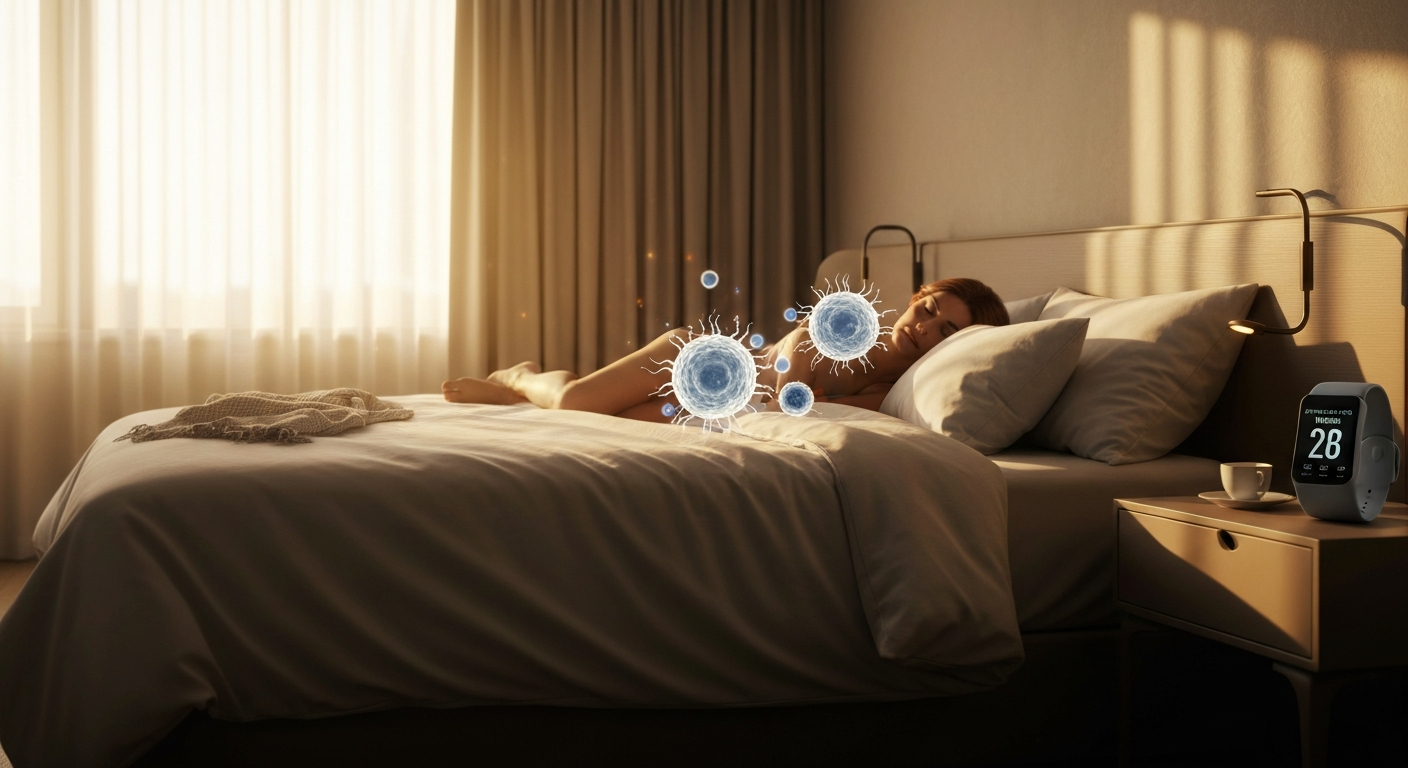
During sleep, your immune system enters a specialized production mode. Your body increases cytokine synthesis—signaling proteins that coordinate immune responses and combat pathogens. Research from 2024-2025 studies demonstrates that individuals averaging 7-9 hours nightly maintain 40% higher antibody levels than chronically sleep-deprived counterparts.
Additionally, deep sleep stages activate T-cell immunity, enhancing your capacity to recognize and neutralize threats. White blood cells circulate more efficiently during rest, improving pathogen surveillance throughout your body. This natural strengthening process occurs automatically when you prioritize adequate sleep duration and quality.
The Immune Suppression Caused by Sleep Loss
Sleep deprivation triggers cascade effects that cripple immune function. A single night of inadequate rest decreases T-cell effectiveness and increases inflammatory markers within 24 hours. Chronic insufficient sleep—defined as averaging under 6 hours nightly—elevates cortisol and inflammatory cytokines, paradoxically triggering a hyperinflammatory state that weakens protection against actual threats.
Furthermore, sleep-deprived individuals experience impaired vaccine response. Studies indicate that vaccination effectiveness decreases substantially when administered after nights of poor sleep. This matters particularly during flu season and immunization campaigns across America, where sleep quality directly influences vaccination success rates.
| Sleep Duration | Immune Cell Count | Infection Vulnerability |
|—|—|—|
| 7-9 hours | Optimal (100%) | Low |
| 5-6 hours | Reduced (-25%) | Moderate |
| <5 hours | Severely compromised (-35%) | High |
| Recovery sleep | Partial restoration (-15%) | Elevated |
Sleep Architecture and Immune Response
Quality sleep requires progressing through distinct stages. Light sleep (N1-N2) prepares your system for deep restoration. However, N3 sleep (deep non-REM sleep) generates the immune benefits most directly.
During deep sleep, your body increases growth hormone and cytokine production significantly. This phase typically comprises 15-20% of total sleep duration in healthy adults. REM sleep additionally supports immune memory consolidation, helping your body remember pathogen patterns from previous exposures.
Achieving adequate deep sleep requires consistency. Irregular schedules disrupt circadian rhythm alignment, reducing deep sleep percentage. American shift workers experience notably compromised immune function compared to those maintaining consistent sleep-wake cycles, highlighting circadian rhythm importance in immune regulation.
Practical Strategies to Optimize Sleep-Immune Connection
Maximizing immune benefits requires deliberate sleep hygiene practices. Maintain consistent sleep-wake times, even weekends. Create bedroom environments between 60-67°F for optimal sleep architecture. Minimize blue light exposure 60 minutes before bedtime, as artificial light disrupts melatonin production and circadian alignment.
Additionally, avoid caffeine after 2 PM and alcohol within three hours of sleep. Exercise improves sleep quality—moderate activity (150 minutes weekly) enhances immune function through dual mechanisms: direct immune activation and improved sleep duration. Finally, manage stress through meditation or journaling, as elevated cortisol from stress competes with immune restoration during sleep.
Frequently Asked Questions
Can you catch up on sleep debt over weekends?
Partially. Weekend sleep recovery provides temporary benefits but cannot fully restore immune function. Chronic sleep loss creates lasting immune deficits that extended weekend rest only partially reverses.
How quickly does sleep improve immunity?
Even a single adequate night begins restoring immune function. However, consistent sleep over weeks demonstrates measurable improvement in antibody production and T-cell effectiveness.
Does sleeping more than 9 hours help immunity?
Excessive sleep (>10 hours regularly) sometimes indicates underlying health issues. Optimal immunity typically requires 7-9 hours; beyond this range rarely provides additional benefits.
Why do people get sick after traveling?
Travel disrupts sleep schedules and circadian rhythms. This desynchronization reduces deep sleep percentage, impairing immune defenses precisely when exposed to new pathogens.
Can supplements replace adequate sleep for immunity?
No. While certain supplements support immunity, they cannot substitute for sleep’s complex restorative processes. Sleep remains irreplaceable for optimal immune function.
Conclusion
Sleep and immunity share an inseparable partnership essential to your health. Prioritizing 7-9 hours of quality, consistent sleep represents one of the most effective health investments available. Your body’s nightly immune restoration depends entirely on adequate rest—no shortcut exists. As scientific evidence continues strengthening since 2024, the message remains clear: protect your sleep, and you protect your immunity. Make sleep a non-negotiable priority, and your immune system will reward you with robust, reliable defense against illness.
References
– National Institute of Allergy and Infectious Diseases (NIAID) documents the relationship between sleep duration and antibody production in immune response studies
– American Sleep Association research demonstrates how sleep deprivation impairs white blood cell function and cytokine production
– CDC sleep guidelines recommend 7-9 hours nightly for optimal immune function based on longitudinal population health studies
– Nature Immunology recent publications highlight deep sleep’s role in T-cell activation and immune memory consolidation
– Harvard Medical School studies show circadian rhythm disruption reduces immune effectiveness by measurable percentages
– American Academy of Sleep Medicine research confirms vaccination effectiveness improves significantly with adequate pre-vaccination sleep
– Johns Hopkins University studies document cortisol elevation during chronic sleep deprivation triggering hyperinflammatory responses