Last updated: November 24, 2026. For general education only, not medical advice.
Acne scars can affect confidence long after breakouts have healed. Many websites promise that natural oils or serums can fade them, but the research tells a different story. This guide explains the types of acne scars, which treatments have real evidence behind them, and what you can do safely at home.
Key takeaways
- More than 80% of acne scars are atrophic (indented), including ice pick, boxcar and rolling scars [1].
- The best-supported treatments are procedures performed by clinicians, such as lasers, radiofrequency, microneedling, chemical peels and fillers. Combining treatments often works better than using one alone [2][3][4].
- Large randomized trials are limited, so no single treatment is the gold standard [4].
- We did not find reliable clinical trials showing that rosehip oil, aloe vera, silica or diet remove acne scars. Claims of exact percentages of improvement should be treated with caution.
- Dark marks left after acne are different from indented scars, and sun protection helps keep them from becoming darker [5].
Types of acne scars
Atrophic scars appear as indentations in the skin, caused by destructive inflammation in the deeper layers of skin. They are often linked to delayed or inadequate acne treatment [4]. Among atrophic scars, ice pick scars are the most common (about 60%), followed by boxcar (about 25%) and rolling scars (about 15%) [1]. Each type responds differently, which is why treatment needs to match the scar [1]. Raised scars (hypertrophic or keloid) are managed differently and should be assessed by a dermatologist.
What does the evidence support?
A systematic review of 89 studies concluded that lasers and radiofrequency are effective for atrophic acne scars, that fractional lasers and radiofrequency offer significant improvement in most types with minimal risks, and that combination therapies typically give better outcomes than single treatments [2]. Another review reports stronger evidence for lasers, platelet-rich plasma as an add-on, chemical peels, dermal fillers such as hyaluronic acid and microneedling, and lower-quality evidence for microdermabrasion, subcision and fat grafting [3]. Deep scars, especially ice pick scars, are harder to improve and may need techniques such as punch excision or punch elevation [4].
Treatment choice depends on the scar type, depth and your skin tone, and each option has risks such as pigment changes. A dermatologist can recommend the safest approach for you.
Natural remedies and at-home products
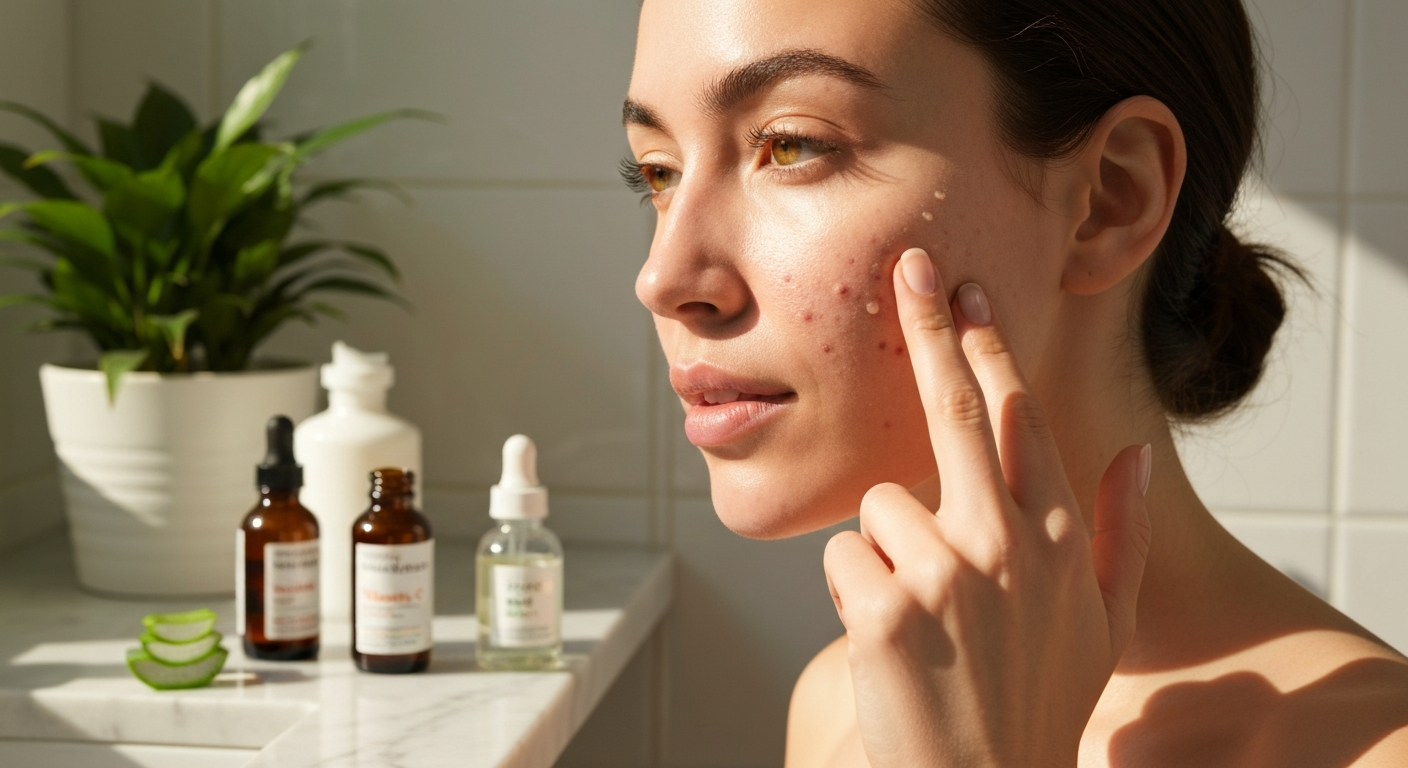
Rosehip oil, vitamin C serums, aloe vera and silica supplements are popular, but the systematic reviews of acne scar treatments do not identify them as proven options [2][3]. They are generally low risk for most people, so they may be reasonable to try for skin comfort, but they should not be expected to remove indented scars. Always patch test new products. Ask a dermatologist before using at-home microneedling or rolling devices, since the evidence above concerns treatments performed in clinical settings and these devices carry risks of irritation and infection.
Dark marks after acne
Post-inflammatory hyperpigmentation, the flat brown or red marks left after a pimple, is not the same as a scar. In people with darker skin, acne combined with sun exposure can lead to longer-lasting, more noticeable dark spots [5]. Daily sun protection helps, and tinted sunscreens with iron oxide may help block the visible light that can worsen pigmentation [5].
Frequently asked questions
Can acne scars be removed completely?
Treatments can improve their appearance, but complete removal is not guaranteed, especially for deep scars [4].
How long do treatments take?
Procedures usually involve multiple sessions, and results vary by method and scar type [2][3].
Is microneedling effective?
Studies support it for atrophic acne scars, often in clinical protocols and combination therapies, but there is no single established protocol [3][6].
Can I prevent scars?
Treating acne early and effectively helps, since scars often follow delayed or inadequate treatment [4]. See a dermatologist if acne is deep, painful or leaving marks.
Conclusion
If you want to fade acne scars, the most reliable route is to consult a dermatologist about procedures suited to your scar type and skin tone, often in combination. Natural remedies are unlikely to remove indented scars, and sun protection is the simplest way to stop dark marks from getting worse. Expect gradual improvement rather than complete removal.
References
- A comprehensive review of non-energy-based treatments for atrophic acne scarring. Clin Cosmet Investig Dermatol. 2022;15. PubMed Central, PMC8963193. https://pmc.ncbi.nlm.nih.gov/articles/PMC8963193
- Acne scarring management: systematic review and evaluation of the evidence. Am J Clin Dermatol. 2018;19(4):459-477. https://pubmed.ncbi.nlm.nih.gov/29744784/
- Evidence-based management of atrophic acne scars (review). Arch Dermatol Res. 2023. https://link.springer.com/10.1007/s00403-023-02737-9
- Attia E. Atrophic postacne scar treatment: narrative review. JMIR Dermatol. 2024;7:e49954. https://pmc.ncbi.nlm.nih.gov/articles/PMC10918545
- NPR. Tinted sunscreen does something regular sun protection can’t (August 2025). https://www.npr.org/2025/08/23/nx-s1-5507260/hyperpigmentation-tinted-sunscreen-protection
- Microneedling for the treatment of acne scars: a scoping review of therapeutic protocols, combination therapies, and current evidence. J Cosmet Dermatol. 2026. https://doi.org/10.1111/jocd.71285
Medical disclaimer
This article is for informational purposes only and does not replace professional medical advice, diagnosis or treatment. Always consult a qualified healthcare provider or dermatologist about scars, particularly if you have a skin condition, are pregnant or breastfeeding, or are taking medication.