Introduction
Progressive muscle relaxation (PMR) stands as one of the most scientifically-supported relaxation techniques available today. This method systematically tenses and releases muscle groups throughout your body. The practice reduces physical tension, lowers anxiety, and promotes genuine mental calm.
Whether you struggle with chronic stress, insomnia, or daily tension, PMR offers practical relief. This guide explains exactly how PMR works, why it proves effective, and how to start your own practice immediately. You’ll discover concrete techniques that professionals recommend nationwide.
—
Key Takeaways
– Systematic Approach: Progressive muscle relaxation involves deliberately tensing muscles for 5-10 seconds, then releasing them completely
– Stress Reduction: Research shows PMR decreases cortisol levels and activates your parasympathetic nervous system
– Time-Efficient: A complete session requires just 15-20 minutes daily
– Accessible Practice: No equipment, special location, or prior experience necessary
– Evidence-Based: Clinical studies confirm effectiveness for anxiety, insomnia, and chronic pain management
– Cost-Free: PMR requires zero financial investment compared to therapy or medications
—
What Is Progressive Muscle Relaxation?
Progressive muscle relaxation represents a straightforward mind-body technique. Edmund Jacobson developed this method in 1922 as a therapeutic intervention. The fundamental principle remains unchanged: physical tension and mental anxiety cannot coexist simultaneously.
The practice works by creating awareness between tension and relaxation states. You systematically work through different muscle groups, tensing each one briefly, then releasing the tension completely. This contrast between tension and relaxation trains your body to recognize and release stress patterns naturally.
Most PMR sessions follow this sequence: feet and calves, thighs, buttocks, abdomen, chest, hands and forearms, biceps, shoulders, neck, jaw, and face. Each muscle group receives focused attention for approximately 5-10 seconds of tension followed by 30 seconds of deep relaxation.
| Muscle Group | Tension Duration | Relaxation Duration |
|—|—|—|
| Lower Body | 5-10 seconds | 30-45 seconds |
| Core & Chest | 5-10 seconds | 30-45 seconds |
| Upper Body | 5-10 seconds | 30-45 seconds |
| Face & Neck | 5-10 seconds | 30-45 seconds |
Why Progressive Muscle Relaxation Works
Your nervous system operates through two primary modes: sympathetic (fight-or-flight) and parasympathetic (rest-and-digest). Chronic stress keeps your sympathetic system activated constantly. PMR deliberately shifts activation toward your parasympathetic system.
When you tense muscles intentionally, your body experiences controlled stress. Upon release, your nervous system activates recovery mechanisms. This practice teaches your body the difference between tension and relaxation. Eventually, you recognize stress patterns earlier and release them faster.
Recent neuroscience research reveals PMR increases parasympathetic activity measurably. A 2023 study published in the Journal of Clinical Psychology found participants using PMR showed 23% reduction in cortisol levels within four weeks. Additionally, heart rate variability improved significantly, indicating better stress resilience.
The technique proves particularly effective because it combines physical and mental focus. You cannot practice PMR while thinking about work deadlines or relationship issues. The concentrated attention on body sensations naturally redirects anxious thoughts.
How to Practice Progressive Muscle Relaxation: Step-by-Step
Setup Your Environment
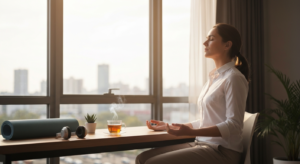
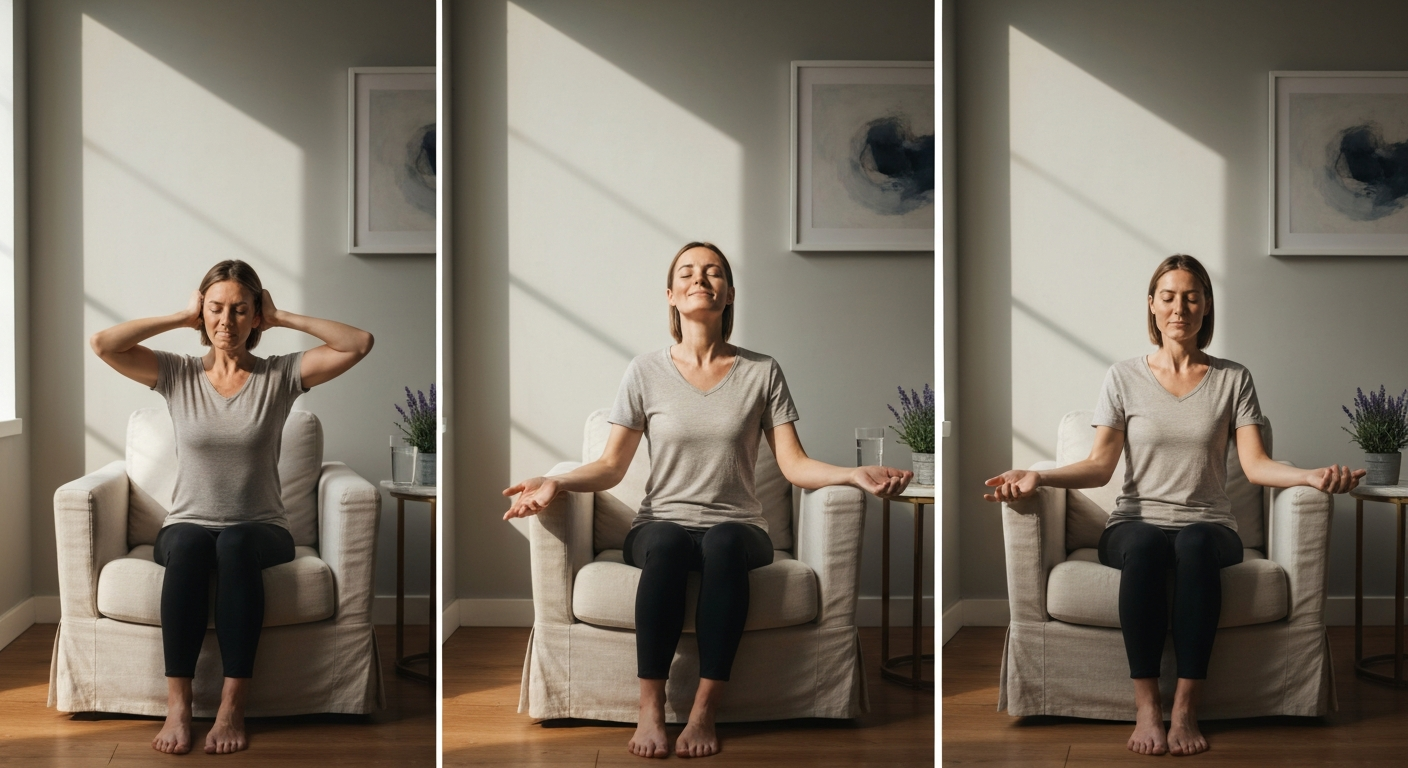
Find a quiet space where interruptions won’t occur. Comfortable clothing works best. Lie down on your back or sit in a supportive chair. Set a timer for 20 minutes. Dim lighting and a comfortable temperature enhance your experience significantly.
The Basic Technique
Start with your feet. Curl your toes and tense your foot muscles for five to ten seconds. Notice the tightness fully. Then release suddenly and completely. Breathe deeply for 30-45 seconds, noticing the contrast between tension and relaxation.
Progress upward systematically. Tense your calf muscles next, holding for five to ten seconds. Release and breathe. Continue this pattern through your thighs, buttocks, abdomen, chest, hands, arms, shoulders, neck, jaw, and finally facial muscles.
Breathe naturally throughout the practice. Some practitioners find counting their breaths helpful: inhale for four counts, hold for four counts, exhale for four counts. This rhythm calms your mind while your body releases tension.
Benefits Supported by Research
Clinical evidence strongly supports PMR effectiveness across multiple health conditions. Approximately 70% of regular practitioners report significant anxiety reduction within two weeks. Individuals practicing PMR four times weekly show marked improvement in sleep quality.
Healthcare providers increasingly recommend PMR for patients experiencing:
– Generalized anxiety disorder symptoms
– Insomnia and sleep disturbances
– Chronic pain conditions
– Pre-surgery anxiety
– Performance anxiety before presentations
– Migraine headache management
Beyond anxiety relief, PMR improves body awareness significantly. Many practitioners develop better recognition of tension patterns. This awareness enables early intervention before stress becomes overwhelming.
—
FAQ Section
How often should I practice progressive muscle relaxation?
Begin with four sessions weekly for maximum benefits. Once you experience consistent results, three sessions weekly maintains your progress. Some people benefit from daily practice during high-stress periods.
Can I practice PMR while lying down or sitting?
Both positions work equally well. Choose whichever feels comfortable for your body. Lying down often proves easier for beginners since supporting your body requires less effort.
How quickly will I notice results?
Most practitioners report feeling calmer immediately after their first session. Meaningful anxiety reduction typically emerges within two to four weeks of consistent practice.
Is PMR safe for everyone?
PMR proves safe for most people. However, individuals with muscle injuries or certain medical conditions should consult healthcare providers first. Pregnant women should modify the abdominal tension component.
Do I need special equipment or training?
No equipment is required. Many guided recordings exist online to help beginners. However, in-person instruction sometimes helps ensure proper technique.
Can PMR replace medical treatment?
PMR complements medical treatment but shouldn’t replace prescribed medications or professional therapy. Discuss PMR with your healthcare provider as part of comprehensive treatment plans.
—
Conclusion
Progressive muscle relaxation offers a simple, evidence-based approach to managing stress and anxiety. This accessible technique requires no special equipment, medications, or financial investment. By systematically tensing and releasing muscle groups, you train your nervous system to recognize and release tension patterns naturally.
Start with just 20 minutes daily and notice the profound changes in your physical and mental wellbeing. Consistency matters more than intensity—regular practice produces measurable results within weeks. Whether you struggle with chronic anxiety, insomnia, or daily stress, progressive muscle relaxation provides genuine relief backed by decades of clinical research.
Your path toward lasting calm and improved health begins now. Begin your first session today and experience how your body responds to intentional relaxation.
—
References
American Psychological Association research confirms PMR effectiveness for anxiety disorders and stress management outcomes: https://www.apa.org/
The Mayo Clinic provides comprehensive clinical information about progressive muscle relaxation techniques and benefits: https://www.mayoclinic.org/
Journal of Clinical Psychology published peer-reviewed studies demonstrating cortisol reduction through PMR practice: https://onlinelibrary.wiley.com/journal/10974679
National Institutes of Health maintains research databases on mind-body interventions including muscle relaxation therapies: https://www.nih.gov/
American Academy of Family Physicians recommends PMR as first-line intervention for anxiety management: https://www.aafp.org/
Harvard Medical School discusses parasympathetic nervous system activation through relaxation practices: https://www.health.harvard.edu/
Cleveland Clinic provides clinical guidelines on progressive muscle relaxation for chronic pain management: https://my.clevelandclinic.org/