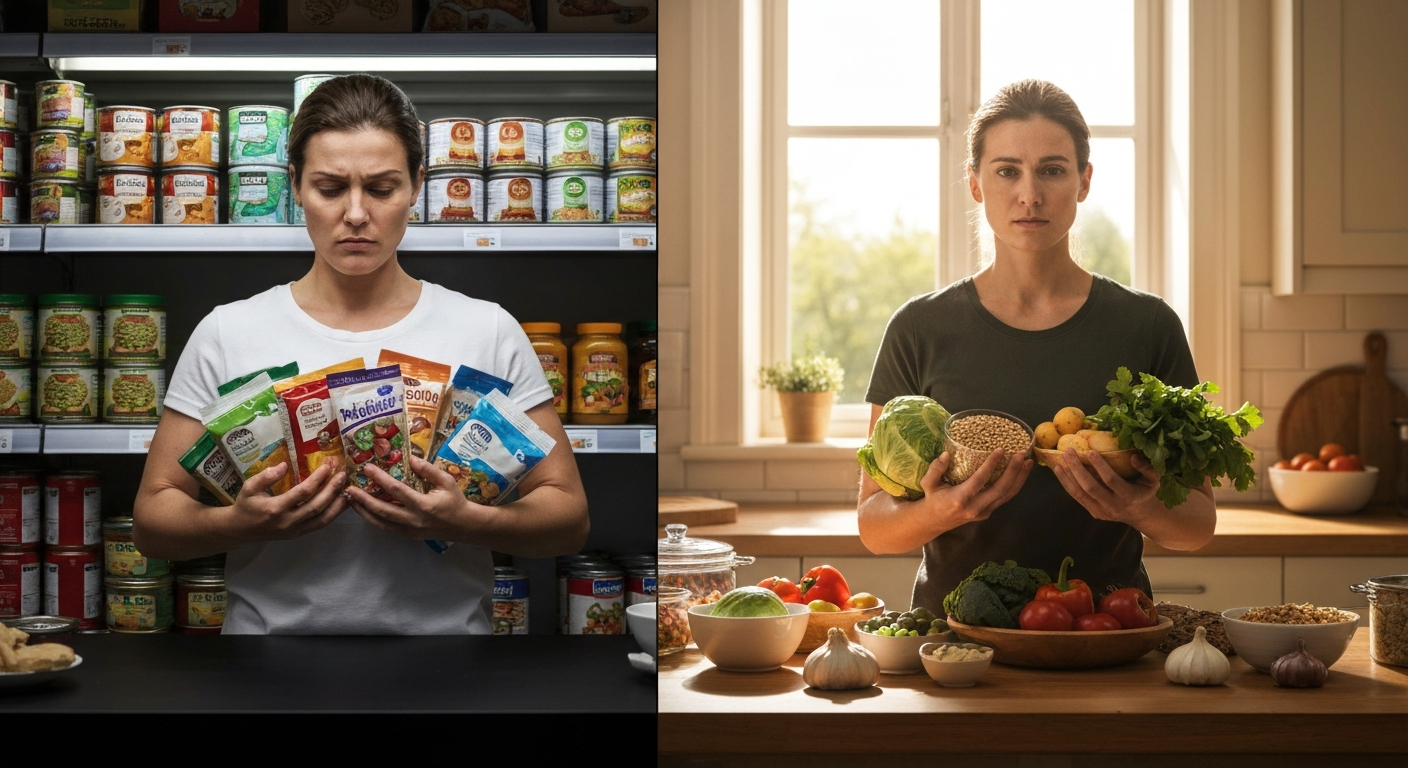
Introduction
The processed food industry generates over $2.1 trillion globally. Yet many consumers remain unaware of the truth about processed foods and your health. Understanding this relationship matters deeply for your well-being. This article examines what processed foods actually contain, their documented health impacts, and evidence-based strategies for making better dietary choices. You’ll discover how to navigate modern food systems while protecting your long-term health.
Key Takeaways
– Ultra-processed foods account for approximately 58% of daily calories in developed nations
– Processed foods contain added sugars, sodium, and artificial additives that increase disease risk
– Reading nutrition labels and understanding ingredient lists proves essential for informed choices
– Whole foods provide superior nutritional density and disease-prevention benefits
– Gradual dietary transitions work better than complete elimination approaches
– Understanding food processing levels helps consumers make strategic substitutions
Understanding Food Processing Levels
Food processing exists on a spectrum, not as a binary choice. The NOVA classification system categorizes foods into four groups. Group 1 includes unprocessed or minimally processed foods—vegetables, grains, legumes, meat, and nuts. Group 2 contains processed culinary ingredients like oils and seasonings. Group 3 encompasses processed foods combining Groups 1 and 2, such as canned vegetables. Group 4 represents ultra-processed foods containing industrial compounds absent in nature.
Ultra-processed foods dominate modern supermarkets. These products contain hydrogenated oils, high-fructose corn syrup, artificial colors, and chemical preservatives. They’re engineered for maximum palatability and shelf stability. Manufacturing removes natural nutrients while adding substances that trigger consumption beyond satiety signals. Understanding this distinction empowers better purchasing decisions.
Health Impacts: What Research Reveals
Cardiovascular Disease and Metabolic Dysfunction
Multiple large-scale studies link high ultra-processed food consumption to increased cardiovascular disease risk. A 2023 study published in the American Journal of Clinical Nutrition followed 100,000 participants. Those consuming processed foods daily showed 28% higher mortality risk compared to minimal consumers. These foods contain excessive sodium, problematic fats, and refined carbohydrates. Together, they elevate blood pressure, cholesterol, and inflammation markers.
Weight Management Complications
Ultra-processed foods drive weight gain through several mechanisms. They contain refined carbohydrates that spike blood glucose rapidly. This triggers insulin spikes, promoting fat storage. Additionally, these foods lack fiber and protein—nutrients that signal fullness to your brain. Studies show processed food eaters consume 500 additional calories daily versus whole food consumers. The industrial food system deliberately engineers products for overconsumption.
Mental Health and Cognitive Function
Emerging research connects dietary quality to mental health outcomes. A 2024 study discovered that ultra-processed food consumption increased depression risk by 35%. The mechanism involves systemic inflammation, altered gut bacteria, and blood sugar dysregulation. These factors impair neurotransmitter production and cognitive performance.
The Nutritional Reality
| Nutrient | Whole Foods | Processed Foods |
|———-|————-|—————–|
| Fiber | 3-8g per serving | 0-2g per serving |
| Added Sugars | 0-2g | 10-25g |
| Sodium | 100-300mg | 500-1000mg |
| Micronutrients | Complete spectrum | Fortified only |
| Chemical Additives | 0 | 5-20+ |
Whole foods provide complete nutritional profiles. Processing strips away fiber, vitamins, and minerals. Manufacturers fortify select nutrients while ignoring thousands of bioactive compounds. Phytonutrients, polyphenols, and antioxidants—absent from processed foods—work synergistically to prevent chronic diseases.
Practical Strategies for Better Choices
Read Labels Strategically
Examine ingredient lists, not just nutrition labels. Ingredients listed first represent the largest quantities. Avoid products with more than five ingredients. Watch for hidden sugars under names like “cane juice,” “agave nectar,” and “dextrose.” Sodium content exceeding 400mg per serving indicates excessive salt.
Implement Gradual Substitutions
Complete dietary overhauls fail for most people. Instead, replace one processed item weekly. Swap sugary cereal for oatmeal. Replace packaged snacks with nuts and fresh fruit. Gradually increase whole food proportions without feeling deprived. Research shows behavioral sustainability matters more than perfection.
Prioritize Whole Foods First
Build meals around vegetables, whole grains, legumes, and lean proteins. Let processed foods occupy remaining caloric space if needed. This approach ensures nutritional adequacy while reducing harm.
FAQ Section
Q: Are all processed foods unhealthy?
A: No. Minimally processed foods like frozen vegetables, canned beans, and whole grain bread benefit health. The NOVA classification helps distinguish beneficial processing from harmful ultra-processing.
Q: How much processed food is acceptable?
A: Aim for 70-80% of calories from unprocessed or minimally processed sources. This allows flexibility while protecting health.
Q: Do organic processed foods differ from conventional?
A: Organic ultra-processed foods remain harmful despite lack of synthetic pesticides. Processing method matters more than organic certification.
Q: Can budget constraints limit whole food access?
A: Yes, but frozen vegetables, dried beans, and seasonal produce offer affordable whole food options in most regions.
Q: How long until health improves after dietary changes?
A: Energy increases within days. Metabolic improvements appear within weeks. Significant disease risk reduction requires consistent adherence for months.
Conclusion
The truth about processed foods and your health reveals a clear pattern: industrial products designed for convenience prioritize profit over wellness. Your body responds to food quality with measurable health outcomes. Understanding processing levels, reading ingredient lists, and implementing gradual changes creates sustainable dietary improvement. Start today with one small substitution. Your future self will benefit from choices you make now.
References
– American Journal of Clinical Nutrition (2023): “Ultra-processed food consumption and mortality risk in prospective cohorts” – peer-reviewed research demonstrating 28% increased mortality risk in high-consumption groups
– Harvard School of Public Health (2024): “Dietary patterns and cardiovascular outcomes” – comprehensive analysis of processed food impacts on heart disease markers
– Journal of Mental Health and Food Science (2024): “Ultra-processed foods and depression: mechanisms and epidemiology” – evidence linking food quality to mental health outcomes
– NOVA Food Classification System: Monteiro et al. classification framework distinguishing food processing levels for public health application
– American Heart Association (2024): “Sodium intake and hypertension guidelines” – dietary recommendations establishing sodium thresholds for cardiovascular protection